Fictional timelines, mapped
Explore fictional universes in chronological order.
Dozens of stories, several formats and no obvious starting point. See what comes first, what comes next and when release order is the better route.
Search Story OrderTry Star Wars, The Witcher, Assassin’s Creed, Cosmere or Avatar.
Explore the universes
Find the world you came for.
Every card opens the full guide. Counts and coverage notes show what is mapped before you enter.
Marvel Cinematic Universe
From the Infinity Saga to multiverse collisions and legacy films, the currently researched branches sit on one clearly scoped map.
Open guide
DC
The new DCU, completed DCEU, Batman and Joker Elseworlds, and legacy branches stay distinct inside one wider DC map.
Open guide
Star Wars
Trace the work-and-arc map from Dawn of the Jedi through the High Republic, Skywalker Saga and the separately labelled Legends timeline.
Open guide
Assassin’s Creed
Follow the Assassin–Templar conflict by historical setting without losing the separate release-led story of Desmond, Abstergo, Layla and the Animus Hub.
Open guide
The Witcher
Follow Geralt and Ciri through Sapkowski’s books, the CD Projekt Red continuation, Netflix’s adaptation and a clearly separated adjacent game lane without merging their contradictions.
Open guide
Avatar: The Last Airbender
Enter the Nickelodeon Avatar universe through Wan, Aang, Korra and the eras between them—with essential comics, older-Avatar novels and separate live-action continuities clearly labelled.
Open guide
Halo
Master Chief is only one thread in a military history filled with Spartans, Forerunners, bridge stories and alternate screen events.
Open guide
Middle-earth
Walk the legendarium from its oldest tragedies through the Ring’s destruction and the later stories imagined around Middle-earth.
Open guide
Resident Evil
The Raccoon City disaster grows into global bioterror, survivor side stories and several radically different outbreak continuities.
Open guide
Dune
Explore the machine wars, the rise of the great schools, Paul’s era and the futures that unfold long after Arrakis changes hands.
Open guide
Alien / Predator
Follow the Ripley and Predator legacies separately, then enter the experiments, hunts and collisions hidden between them.
Open guide
Wizarding World
Explore Harry’s seven-year story, earlier wizarding conflicts, later stage events and the nineteenth-century mysteries around Hogwarts.
Open guide
The Wheel of Time
Follow the Dragon Reborn through the complete turning of the Wheel, its reshaped screen journey and one unusual earlier game branch.
Open guide
The Cosmere
Follow the mapped published fiction and Roshar RPG stories from White Sand through Mistborn, Stormlight and the space-age Cosmere.
Open guide
Malazan
The ten-book epic opens into imperial companion novels, ancient Tiste history, founding legends and a new era of Witness.
Open guide
Realm of the Elderlings
Five connected arcs reveal the Six Duchies, sentient ships, dragons and the lives transformed around Fitz and the Fool.
Open guide
A Song of Ice and Fire
Trace Targaryen civil war, Dunk and Egg, the published main saga and the points where the screen version forges its own future.
Open guide
Discworld
Follow witches, watchmen, wizards, Death and industrial revolution as their stories repeatedly collide across the Disc.
Open guide
Fallout
Move from Fallout 76 through the classic games, Mojave and Commonwealth into the canon Prime Video future.
Open guide
Call of Duty
Choose Black Ops, Modern Warfare, WWII, Zombies or another continuity instead of forcing every campaign into one false timeline.
Open guide
Demon Slayer
Follow Tanjiro’s core story without duplicating every adaptation, then add novels, games, stage productions and the Kimetsu Academy branch.
Open guide
DC Animated Universe
Trace the shared DCAU screen continuity and its optional comic and game branches from Batman: The Animated Series to JLU’s Epilogue.
Open guide
DC Animated Movie Universe
Watch the connected Flashpoint-to-Apokolips film continuity without mixing in standalone DC animation or the Tomorrowverse.
Open guide
Batman: Arkham
Follow Batman’s Arkham universe across games, story DLC, VR, the animated film and grouped comic and novel tie-ins. Gotham Knights, Injustice and Telltale Batman belong to other continuities.
Open guide
Metal Gear
Explore Metal Gear by its in-universe years, from Snake Eater in 1964 to Revengeance in 2018. Remakes and adaptations stay attached to their games, while Acid, Ghost Babel, Survive and Snake’s Revenge have separate branches.
Open guide
Silent Hill
Silent Hill is a collection of connected and standalone horror stories. This guide keeps the Alessa and Heather route together, identifies independent games and separates licensed comics, films and reimaginings.
Open guide
Dragon Ball
Navigate Dragon Ball across manga, anime, films and games. The main Super-era route stays separate from GT, classic movie branches and crossover game universes, with adaptations grouped by story era.
Open guide
The Hunger Games
Read The Hunger Games in Panem’s chronological order, from young Snow and Haymitch to Katniss. Five novels form the story spine, with their film adaptations attached to the same events.
Open guide
God of War
Follow Kratos across the Greek and Norse eras, with the main games, optional comics, novelizations and Valhalla. Remasters and ports stay with their original stories; Laufey remains upcoming.
Open guide
Naruto / Boruto
Follow Naruto and Boruto through manga, anime, The Last and Two Blue Vortex. Optional films, novels, OVAs and game retellings have clear labels, with adaptations grouped under their stories.
Open guide
The Conjuring Universe
Watch The Conjuring Universe in story order from The Nun to Last Rites. Follow Annabelle and the Warren cases, with The Curse of La Llorona clearly marked as disputed adjacent viewing.
Open guide
Jujutsu Kaisen
Read and watch Jujutsu Kaisen from Hidden Inventory and JJK 0 through Shibuya, the Culling Game and the manga finale. Compilation films remain alternate versions, and game stories stay outside Core.
Open guide
Attack on Titan
Follow Attack on Titan across its main manga and anime, with Before the Fall, No Regrets, OVAs and side novels. The ending compilation shares one story card; parody, game and live-action branches remain separate. Attack on Titan 3 is attached to the existing game-adaptation card.
Open guide
Tomb Raider
Explore Lara Croft’s Survivor, Classic and Legend timelines, with animation, films, comics and novels in their own continuity branches.
Open guide
Metro
Follow Metro through separate book and game routes, including Awakening, the core novels, Exodus, its DLC and the upcoming Metro 2039, with expanded literature kept optional.
Open guide
Life is Strange
Explore Life is Strange from Farewell to Reunion, with prequel DLC, Steph’s Story and clearly labelled choice-dependent comic and novel branches.
Open guide
Kingdom Hearts
Trace Kingdom Hearts from the ancient Keyblade era through Sora’s journey, with overlapping stories labelled and manga, novels and story movies grouped with their games.
Open guide
Devil May Cry
Follow Devil May Cry’s main games and the 2007 anime, add prequel novels and manga, or explore the separate Netflix animated universe.
Open guide
Throne of Glass
Read Sarah J. Maas’s Throne of Glass in chronological or first-time order, with the five Assassin’s Blade novellas grouped and Empire of Storms / Tower of Dawn marked as parallel stories.
Open guide
The Chronicles of Narnia
Explore all seven Narnia books in chronological and publication order, with BBC television, Walden films and audio adaptations grouped under the stories they retell.
Open guide
Fate
Choose a Fate universe before following its story: stay night’s alternate routes, Grand Order’s chapter sequence, Extra, Prisma Illya and standalone Grail Wars are separate paths.
Open guide
Yellowstone Universe
Watch the Dutton family story from 1883 and 1923 through Yellowstone, then follow Kayce in Marshals or Beth and Rip in Dutton Ranch, with upcoming seasons separated.
Open guide
One Piece
Follow One Piece by manga sagas rather than individual chapters or anime episodes, with cover stories, films, games and Netflix's separate screen continuities clearly marked.
Open guide
Star Trek
Travel from Enterprise to Starfleet Academy through the Prime Timeline's eras, then explore the separate Kelvin films and optional licensed books, comics and games.
Open guide
Evangelion
Watch the original TV ending and The End of Evangelion as overlapping perspectives, then follow the four-film Rebuild as a separate route; manga, ANIMA and school or game universes stay distinct.
Open guide
Fast & Furious
Watch the Fast Saga in story order, including two official bridge shorts, the Tokyo Drift correction, Hobbs & Shaw's side branch and the separate animated Spy Racers.
Open guide
A Court of Thorns and Roses
Follow the five released ACOTAR books in reading order, with the bridge novella in place and the two announced Valkyrie Cycle books clearly Upcoming.
Open guide
Big Little Lies
Find the HBO watch order and Liane Moriarty's book reading order, with the released sequel Big Little Truths and the developing third TV season clearly distinguished.
Open guideHow Story Order works
One story. Every way to explore it.
The guide stays complete without repeating the same story in every format.
Versions together
One story, one place
Books, adaptations, audio and games stay grouped beneath the story they share.
Two useful orders
Choose how it unfolds
Chronology maps the events. Release order preserves the original reveals.
Your depth
Full map or main path
Open everything, or switch on Starter Mode for a shorter first journey.
The hard cases
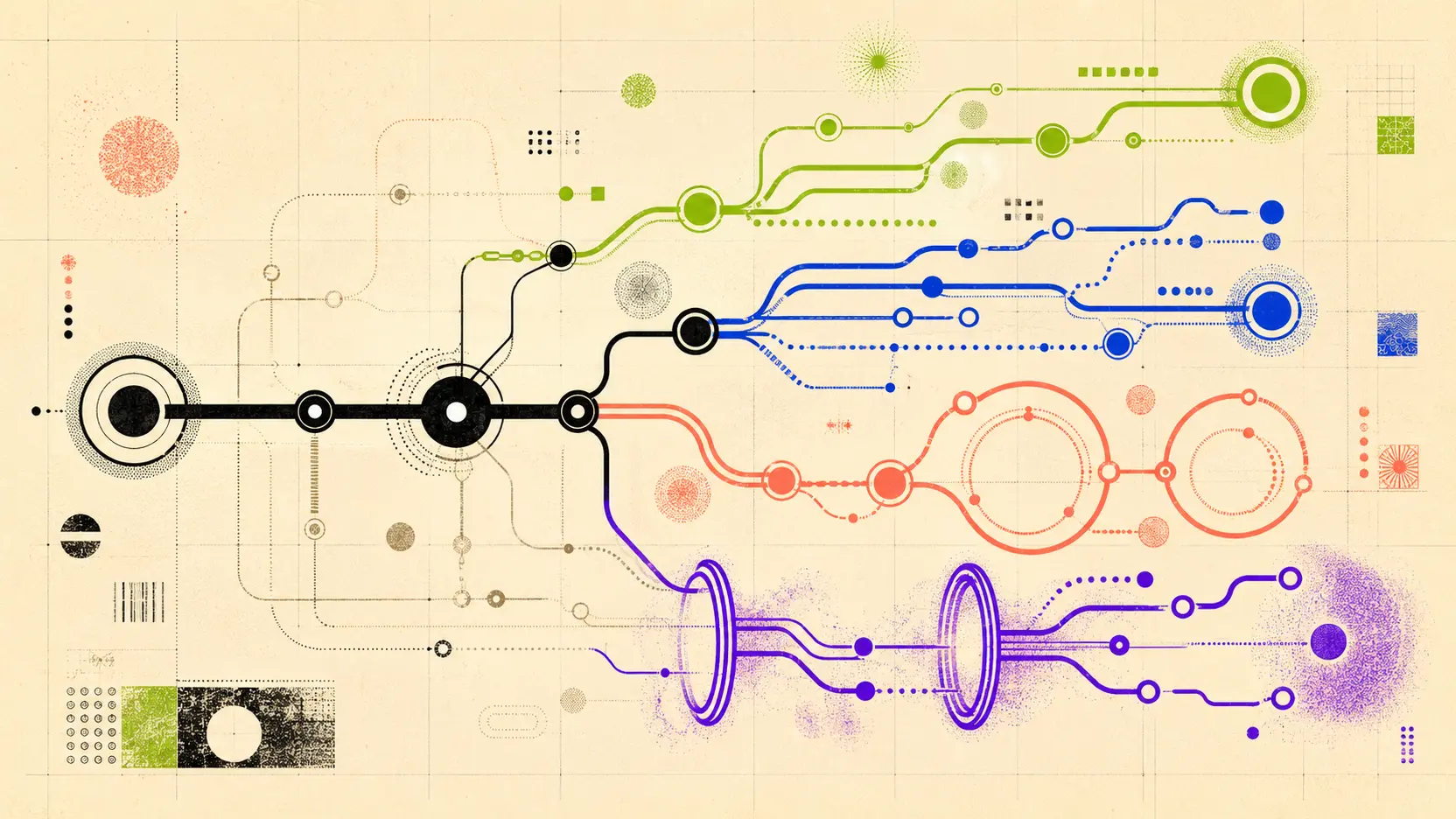
Timelines are messy. The guide should not be.
Prequels arrive late. Stories overlap. Canon splits. We show those limits instead of inventing certainty.Read the methodologyOfficial timelines and story evidence set the order.
Separate continuities stay separate.
Approximate placements are marked clearly.
Frequently asked questions
Useful answers before you begin.
Should I use chronology for my first time?
Not always. Chronology is useful for seeing events unfold, while release order often preserves the reveals intended by the creators. Each guide lets you switch between both.
What is Starter Mode?
Starter Mode trims a large universe to its central path. You can turn it off at any time to restore every mapped story.
Why are adaptations grouped together?
A novel, film, audiobook or game adaptation can be different ways to experience the same underlying story. We keep those versions together instead of repeating the story across the timeline.
How do you handle conflicting timelines?
Separate continuities remain separate. When evidence is incomplete or contradictory, the placement is labelled as approximate instead of being presented as settled fact.
Are upcoming stories included?
Upcoming works are kept outside the published chronology until they release and their placement can be checked.
Does every guide cover every format?
Coverage varies by universe. Each guide states what is mapped now and what still needs a deeper research pass.
Can I request a universe or correction?
Yes. Send the title, missing story or disputed placement through the request page. No email address is required.
Where does the ordering information come from?
We prioritise official franchise sources, the stories themselves and verified release records. Editorial judgement is used only where the evidence does not provide an exact answer.
Is my progress saved?
Yes. Stories you mark as explored are saved in that browser only. Story Order does not require an account to remember your checklist.
Start exploring