Assassin’s Creed Start Here
Where Should You Start With Assassin’s Creed in 2026?
Choose an Assassin’s Creed starting point for the original story, modern gameplay or a historical setting, without committing to every game.
Play
Enter the Assassin’s Creed universe
Synchronise history. Preserve the modern story.
Follow Assassin’s Creed in story order across the main games, historical memories, the modern-day Animus storyline and connected books, comics, film and audio stories.
Explore 74 games, novels, comics and screen stories by historical setting—then follow the separate 21-part modern-day frame in release order.
Universe orientation
Use release order for a first playthrough. Historical order begins with Odyssey-era material, but it scrambles Desmond, Layla and the modern-day plot beyond recognition.
Switch to release order or use Starter Mode for a shorter route.The second chronology
Desmond, Abstergo, Layla and the Animus Hub move forward by release—not by the century being simulated. These 21 frame chapters are shown separately so historical browsing never destroys their narrative.
Found in Game
Assassin’s Creed — Desmond at Abstergo occupies this point in the modern-day frame.
Found in Game
Assassin’s Creed II — Desmond joins modern Assassins occupies this point in the modern-day frame.
Found in Game
Brotherhood — Monteriggioni / Apple occupies this point in the modern-day frame.
Found in DLC
The Lost Archive — Clay Kaczmarek history occupies this point in the modern-day frame.
Found in Game
Revelations — Animus Island occupies this point in the modern-day frame.
Found in Game
Assassin’s Creed III — Grand Temple occupies this point in the modern-day frame.
Found in Comics
The Fall / The Chain — Daniel Cross modern story occupies this point in the modern-day frame.
Found in Web/transmedia
Initiates / Project Legacy dossiers occupies this point in the modern-day frame.
Found in Game
Black Flag — Abstergo Entertainment researcher occupies this point in the modern-day frame.
Found in Game
Rogue — Abstergo analyst occupies this point in the modern-day frame.
Found in Game
Unity — Helix Initiate occupies this point in the modern-day frame.
Found in Game
Syndicate — Helix / Bishop occupies this point in the modern-day frame.
Found in Film
Assassin’s Creed film — Callum Lynch occupies this point in the modern-day frame.
Found in Comics
Assassins / Templars / Uprising comics occupies this point in the modern-day frame.
Found in Game
Origins — Layla Hassan begins occupies this point in the modern-day frame.
Found in Game
Odyssey — Layla / Atlantis occupies this point in the modern-day frame.
Found in Game
Valhalla — Layla, Basim and the Grey occupies this point in the modern-day frame.
Found in Audio drama
Assassin’s Creed Gold occupies this point in the modern-day frame.
Found in VR game
Nexus VR — Dominika Wilk/Abstergo modern frame occupies this point in the modern-day frame.
Found in Game
Mirage — historical experience framed after Valhalla occupies this point in the modern-day frame.
Found in Game/platform
Shadows / Animus Hub modern layer occupies this point in the modern-day frame.
Universe explored
The main map follows the ancestor memories from the Isu simulations to twentieth-century conflicts. It does not pretend that this is a safe first-play order: the modern-day frame has its own dedicated chronology directly above it.
Historical setting controls this view. The modern-day storyline is intentionally separated because it only remains coherent in release order.
Showing 74 of 74 released stories.
Placed 431–422 BCE. Source status: C.
Steam / IGDBPlaced during/after Odyssey. Source status: C.
Steam / IGDBPlaced after main Odyssey. Source status: C/A.
Steam / IGDBPlaced 431 BCE. Source status: R / alternate Kassandra telling.
Placed ~70s–50s BCE. Source status: C.
GoodreadsPtolemaic Egypt. The founding of the Hidden Ones. If you want the Brotherhood's actual origin story, this is it.
Steam / IGDBPlaced ~38 BCE. Source status: C.
Steam / IGDBPlaced 44–30 BCE. Source status: C/A.
Placed early 7th century. Source status: C/A.
Li E during the An Lushan Rebellion, Tang dynasty China. Chinese-market original; a genuinely under-read corner of the franchise.
Placed 1526 CE. Source status: C.
Steam / IGDBPlaced 1526–1530s. Source status: C/A.
GoodreadsPlaced 824 CE ~. Source status: C/A.
Placed ~850s. Source status: C/A.
Basim Ibn Ishaq in Abbasid Baghdad. A deliberate return to the pre-RPG formula. Historically before Valhalla, but must be played after it — its modern-day framing spoils Valhalla entirely.
Steam / IGDBBasim follows a lead about his long-lost father to AlUla. Ubisoft places this six-plus-hour story expansion before the final events of Assassin’s Creed Mirage.
Placed ~860s. Source status: C/A.
Placed 867 CE. Source status: C.
GoodreadsPlaced ~870 CE. Source status: C/A.
Placed 872–878+ CE. Source status: C.
Placed 879 CE ~. Source status: C.
Steam / IGDBPlaced 885–886 CE. Source status: C.
Steam / IGDBPlaced mythic/Isu memory layer. Source status: C/A.
Placed mythic/Isu memory. Source status: C/A.
Placed late Eivor life framing. Source status: C.
Placed Viking Age. Source status: C/A.
GoodreadsPlaced Viking Age. Source status: C/A.
GoodreadsPlaced mythic/Isu layer. Source status: C/A.
Placed 1190 CE. Source status: C/A.
Altaïr Ibn-La'Ahad, Third Crusade. The original. Structurally repetitive by modern standards; historically essential.
Placed Altaïr life, multi-era. Source status: C/A.
GoodreadsPlaced 1191 CE, after AC1. Source status: C.
Placed 12th–13th c.. Source status: C.
Placed Altaïr era. Source status: C/A.
Giovanni Auditore, Ezio's father. Produced as a marketing prequel to AC II; genuinely good, entirely canon, almost forgotten.
IMDbEzio in Florence, Venice, Tuscany. The best entry point to the entire franchise. Everything the series is known for begins here.
Placed 1491 CE. Source status: C/A.
Oliver Bowden. The first AC novel.
Rome. Introduces recruit management and the series' first multiplayer. Widely regarded as the peak of the pre-RPG era. The supplied chronology also indexes a novel version with this story. The supplied chronology also indexes an additional novel version with this story.
Steam / IGDBPlaced 1506 CE. Source status: C.
Cesare Borgia's backstory, told in motion-comic style.
IMDbEzio in Constantinople, aged 52, searching for Altaïr's library. Closes both Altaïr's and Ezio's arcs at once. The supplied chronology also indexes a novel version with this story. The supplied chronology also indexes an additional novel version with this story.
Steam / IGDBPlaced Desmond/Clay layer; memories pre-2012. Source status: C.
Ezio's final days and death. Ten minutes long. Do not skip it — it is the actual ending of the Ezio trilogy and it ships buried in a bonus menu.
IMDbPlaced 16th century China. Source status: C/A.
GoodreadsPlaced 1839 CE India + modern. Source status: C.
GoodreadsPlaced 1841 CE. Source status: C.
Steam / IGDBPlaced 1840s–1860s. Source status: C/A.
Edward Kenway’s main Caribbean memories from 1715–1722. Assassin’s Creed Black Flag Resynced (released 9 July 2026) is attached here as a remake of the same underlying story rather than a duplicate chronology event; it adds new narrative material including the eight-mission A World Without Gold chapter, officer questlines, additional Blackbeard and Stede Bonnet quests, Animus rifts and other expanded story beats.
Placed Edward life, expanded. Source status: C/A.
GoodreadsPlaced 1735–1737 CE. Source status: C.
Steam / IGDBPlaced 1725+ CE. Source status: C/A.
Shay Cormac, an Assassin who defects to the Templars. The franchise's best structural argument — it makes you the villain of AC III and is right to. Overlooked because it shipped on last-gen hardware the same week as Unity.
Placed 1754+ CE. Source status: C.
Oliver Bowden. Haytham Kenway's journal. Recontextualises AC III entirely; best read before it, not after.
GoodreadsPlaced 1760–1783 CE. Source status: C.
Placed alternate Apple-created reality. Source status: M.
Placed 1765–1777 CE. Source status: C.
Placed 1778–1794 CE. Source status: C/A.
Arno Dorian, French Revolution. Catastrophic launch; now patched to 60fps and substantially rehabilitated. The densest crowd simulation and best parkour in the series.
Jacob and Evie Frye, Victorian London. The last pre-RPG mainline game.
Placed 1862–1868 CE. Source status: C/A.
Placed 1888 CE. Source status: C.
Placed 1888–1908 CE. Source status: C.
Placed early 20th c.. Source status: C.
Placed 1918 CE. Source status: C.
Placed WWII era. Source status: C/A.
GoodreadsPlaced 1950s–1960s. Source status: C/A.
GoodreadsPlaced 1579 onward. Source status: C.
Placed immediately after base ending. Source status: C.
Released 16 June 2026. Black Tides is an approximately two-hour story capper for Naoe and Yasuke that introduces the Black Cross Templars and explicitly bridges Assassin’s Creed Shadows toward Black Flag Resynced. Ubisoft requires the main Naoe/Yasuke story and A Critical Encounter before starting it.
From the Library
Make sense of the timeline, then find your next story.
Assassin’s Creed Start Here
Choose an Assassin’s Creed starting point for the original story, modern gameplay or a historical setting, without committing to every game.
Play
Assassin’s Creed Canon & Continuity
Understand the historical adventures, Animus framing and modern-day threads that connect Assassin’s Creed, even when a game feels standalone.
Play · Read
Assassin’s Creed Before You Watch / Read / Play
Mirage follows an earlier Basim, but Valhalla introduced him first. Choose between his life chronology, release-order reveals and a shorter stealth game.
Play
Find your route
Use one authoritative timeline, then choose the view that matches how you want to experience the universe.
Use the chronology for story sequence, then switch to release order when you want the original viewing experience.
Game entries stay in the same researched timeline, with adaptations and side stories labelled so they do not distort the play sequence.
Books, comics and other reading material are placed by story chronology while publication order remains available as a separate view.
Release order re-sorts the same mapped stories by first publication or release instead of creating a duplicate guide page.
Start with the guide’s recommended route if this is your first time. Use the full chronology when you want the complete cross-media timeline.
Quick answers
Direct answers based on the same chronology, continuity labels and coverage notes used in the guide.
Use release order for a first playthrough. Historical order begins with Odyssey-era material, but it scrambles Desmond, Layla and the modern-day plot beyond recognition.
Use chronological order to follow events as they happen. Use release order when you want to preserve the sequence of the original reveals. Both views use the same researched stories.
All-media guide: 74 ordered historical-memory and transmedia records, plus a separate 21-part modern-day chronology. Black Flag Resynced is attached to the original Black Flag story as a remake with additional narrative material rather than duplicated as a second full chronology event. Coverage is current through released narrative works and confirmed story material available by 8 September 2026.
Suggested routes
Use the full chronology or follow a shorter route.
Then Brotherhood → Revelations → III before branching outward.
Continue Odyssey → Valhalla → Mirage for the newer connected arc.
It keeps the modern-day story coherent even when historical periods jump.
Story versions
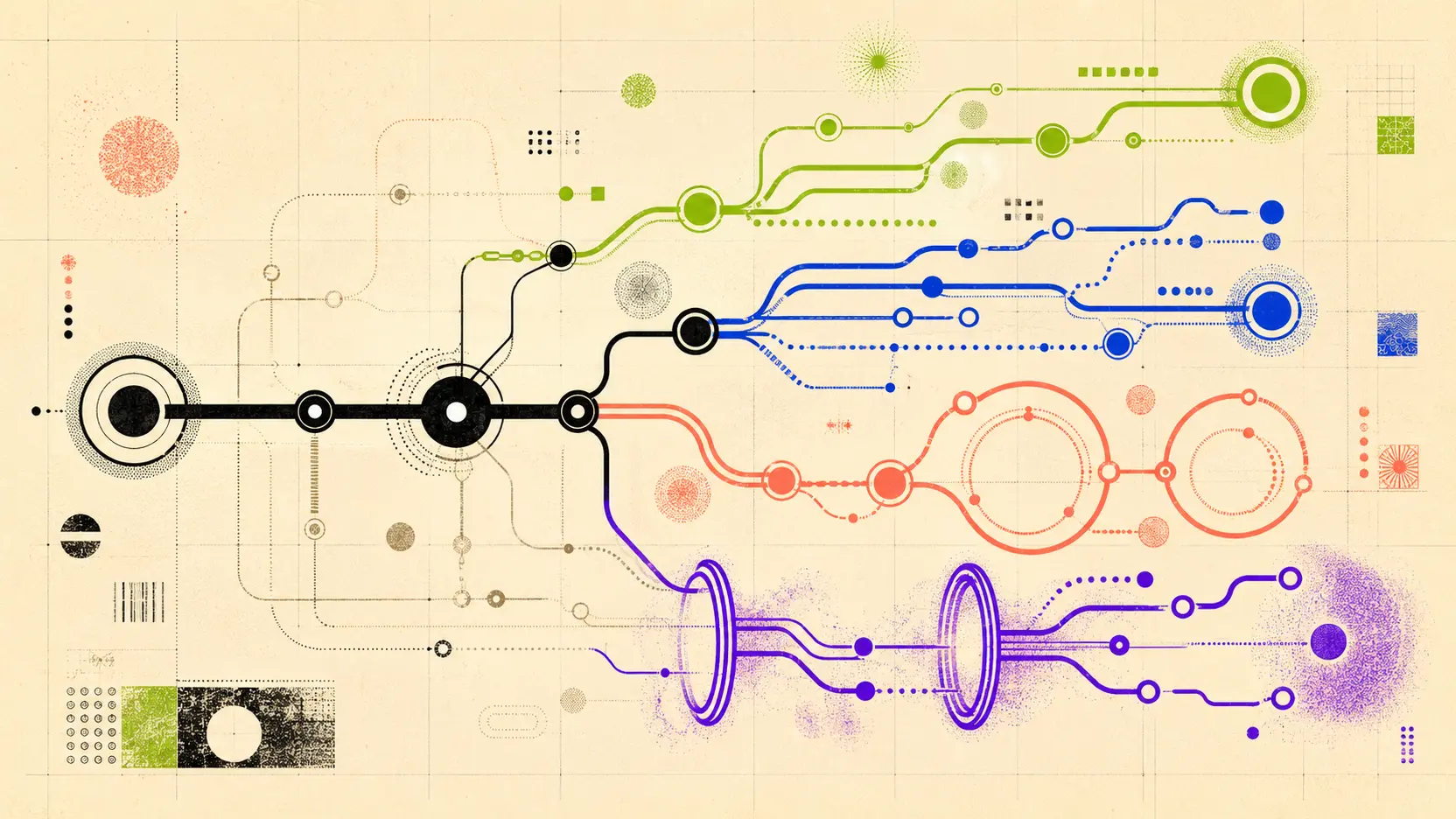
Researched editions and adaptations stay together under one story.
See how stories are organisedSources
Official franchise, creator and publisher sources anchor the chronology. Conflicts and uncertain placements are labelled.
Missing something?
Request a title or correction.
Send a request