The Witcher Start Here
Where Should You Start With The Witcher: Books, Games or Netflix?
Choose the original Witcher books, CD Projekt Red’s games or Netflix’s adaptation without combining them into one continuous canon.
Read · Watch · Play · Listen
Enter the Witcher universe
Follow Geralt. Keep every world distinct.
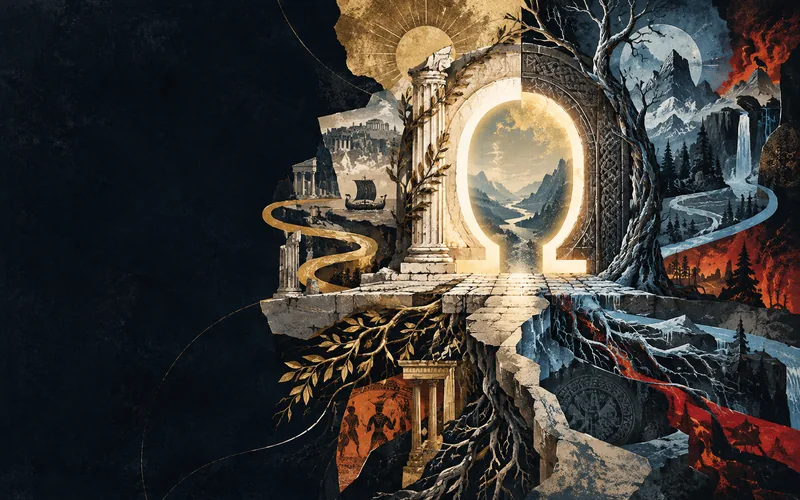
Explore The Witcher across Sapkowski’s books, CD Projekt Red’s games and Netflix’s separate adaptation timeline, with each continuity kept distinct instead of being merged into one canon.
Map 50 ordered works across Sapkowski’s books, CD Projekt Red’s licensed continuation, Netflix’s separate screen continuity and an explicitly labelled adjacent game lane.
Universe orientation
For the original literary story, read The Last Wish, then Sword of Destiny, then Blood of Elves and the rest of the saga. For the screen adaptation, start with Netflix Season 1. The games are another continuity route; do not interleave the show between game quests as if it were a sequel.
Why we recommend this route ↓Switch to release order or use Starter Mode for a shorter route.Universe explored
There is no honest single Witcher canon. The full map therefore keeps the literary, CD Projekt Red and Netflix continuity spines distinct, including the game sequence that continues a book ending its author deliberately leaves ambiguous.
The records run as one numbered chronology. Each licensed telling keeps its continuity label, book-era dates remain approximate, and recommended reading order is not always the same as in-world chronology.
Showing 49 of 49 released stories.
Geralt at eighteen, freshly out of Kaer Morhen and bad at everything. The newest Witcher book and chronologically the earliest.
GoodreadsPlaced Earlier world/proto-Witcher connection. Source status: A / canon relationship debated.
GoodreadsPlaced Early Geralt. Source status: C.
Placed Early Geralt / Blaviken. Source status: C.
GoodreadsPlaced Early Geralt. Source status: C.
The entry point. Frame narrative at the Temple of Melitele. Contains "The Witcher," "A Grain of Truth," "The Lesser Evil," "A Question of Price," "The Edge of the World," "The Last Wish." Introduces Yennefer, Dandelion/Jaskier, Nivellen, Renfri.
GoodreadsPlaced Pavetta/Duny; before Ciri’s birth. Source status: C.
Geralt takes the striga contract in Vizima in the short story that introduced The Witcher, later collected in The Last Wish.
GoodreadsPlaced After The Witcher; frames Last Wish collection. Source status: C.
Placed Around early short-story era. Source status: C / placement overlaps.
Placed Geralt/Yennefer dragon hunt. Source status: C.
Placed Geralt/Yennefer/Istredd. Source status: C.
Placed Novigrad. Source status: C.
Placed Essi Daven. Source status: C.
Placed Geralt meets Ciri in Brokilon. Source status: C.
Placed Fall of Cintra aftermath / Geralt finds Ciri. Source status: C.
The five-book saga begins. Ciri at Kaer Morhen.
GoodreadsThanedd. The Continent breaks.
GoodreadsGeralt assembles the company — Milva, Regis, Cahir, Angoulême. The best-liked book in the saga.
GoodreadsCiri and the Rats. Structurally the most experimental.
GoodreadsThe saga's conclusion. Arthurian frame; deliberately ambiguous ending — the ambiguity is what allows the games to exist.
Placed Far-future framing. Source status: C / Multi-Era.
Geralt returns with no memory. Dated, awkward, tonally distinctive; a remake is in development. The Salamandra plot matters less than the political groundwork it lays.
Direct sequel. Branching so severe that Act II is effectively two different games. The most politically dense entry.
Placed Post-Witcher 2 Iorveth/Roche-branch material. Source status: CDPR / branch-sensitive.
Geralt searches for Ciri across the Northern Kingdoms. The Witcher 3: Wild Hunt — Remastered launches on 29 September 2026 as an upgraded version of this same underlying game, so it stays attached here rather than becoming another story card.
Placed During/late Witcher 3. Source status: CDPR.
Placed After main Witcher 3; intended epilogue. Source status: CDPR.
Placed Game continuity. Source status: CDPR.
Placed Game continuity; adapts material from Season of Storms. Source status: CDPR/R.
Placed Post-Witcher 3. Source status: CDPR.
Placed Post-Witcher 3. Source status: CDPR.
Placed Post-Witcher 3. Source status: CDPR.
Placed Post-Witcher 3. Source status: CDPR.
Placed CDPR continuity. Source status: CDPR.
Placed CDPR continuity. Source status: CDPR.
Placed After Blood and Wine. Source status: CDPR.
Placed CDPR continuity. Source status: CDPR.
Placed 2026 release; CDPR continuity. Source status: CDPR.
Released 25 February 2026. Nerial and Devolver Digital reinterpret Geralt through branching Dandelion ballads and repeated choice-driven runs. Keep it as an official adjacent crossover rather than folding its outcomes into the CD Projekt Red game canon.
The Conjunction of the Spheres and the first witcher. Netflix-original lore with no book source. Poorly received; nevertheless canonical within this lane.
IMDbVesemir's youth and the sacking of Kaer Morhen. Studio Mir. The best-regarded thing Netflix has made in this universe, and largely original.
IMDbPlaced multi-era; Geralt/Yennefer/Ciri timelines converge. Source status: Netflix.
IMDbAdapts the short story "A Little Sacrifice." Doug Cockle — Geralt's voice in all three games — voices Geralt here, in the Netflix continuity, while Anya Chalotra and Joey Batey reprise from live action. A deliberate cross-lane casting choice that confuses continuity discussions constantly.
IMDbPlaced after Sirens placement. Source status: Netflix.
IMDbPlaced after S1. Source status: Netflix.
IMDbPlaced after S2. Source status: Netflix.
IMDbOrigin of the Rats gang from The Tower of the Swallow. Originally commissioned as a miniseries, cancelled, then condensed into a special and released with no announcement alongside Season 4. Netflix's own guidance is to watch it after all eight S4 episodes.
IMDbPlaced 2025; after S3. Source status: Netflix.
IMDbNot part of the checklist
These records are tracked for context but are excluded from chronology numbers, filters and progress until release.
From the Library
Make sense of the timeline, then find your next story.
The Witcher Start Here
Choose the original Witcher books, CD Projekt Red’s games or Netflix’s adaptation without combining them into one continuous canon.
Read · Watch · Play · Listen
The Witcher Before You Watch / Read / Play
Season of Storms revisits an earlier Geralt, but Orbit places it after the saga. Choose a first-read or reread plan without game homework.
Read · Listen
Editorial guidance
A “first novel” label describes the start of the longer saga, not the beginning of Geralt’s published short-story material. The two introductory collections establish relationships the novels develop. A historical placement for a prequel does not make it a better first encounter than The Last Wish.
The literary, CD Projekt Red and Netflix lanes answer different continuity questions. Read within a lane first; compare later. The guide groups recognisable retellings for discovery, but a grouped version is not proof that every event happened identically. The separate Netflix timeline is particularly useful when its first season moves between periods.
If reading is your goal, finish the introductory collections before treating tie-ins as preparation. If playing is your goal, decide whether you want the game sequence from its beginning or a later entry with some unfamiliar relationships. Our Library comparison explains that trade-off. Neither choice requires watching the television adaptation first.
Clarified short-story prerequisites, adaptation boundaries and first-read versus historical order. This date covers these reading and viewing notes, not a fresh audit of every chronology record. The guide’s coverage date remains above.
Starting points and optional-route judgments are Story Order recommendations. They are distinct from official chronology and canon statements.
Quick answers
Direct answers based on the same chronology, continuity labels and coverage notes used in the guide.
For the original literary story, read The Last Wish, then Sword of Destiny, then Blood of Elves and the rest of the saga. For the screen adaptation, start with Netflix Season 1. The games are another continuity route; do not interleave the show between game quests as if it were a sequel.
Use chronological order to follow events as they happen. Use release order when you want to preserve the sequence of the original reveals. Both views use the same researched stories.
All-media guide: 50 ordered work-level and arc-level records. Songs of the Past is labelled upcoming for 2027, while Reigns: The Witcher stays in a separate adjacent/alternate game lane instead of being folded into the CD Projekt Red canon. Coverage is current through released material available by 8 September 2026; Songs of the Past remains upcoming for 2027.
Suggested routes
Use the full chronology or follow a shorter route.
Short stories before novels; save the later standalones until the saga is complete.
The earlier games add context, while the books add much more.
Its seasons and animated films share their own adaptation continuity.
Story versions
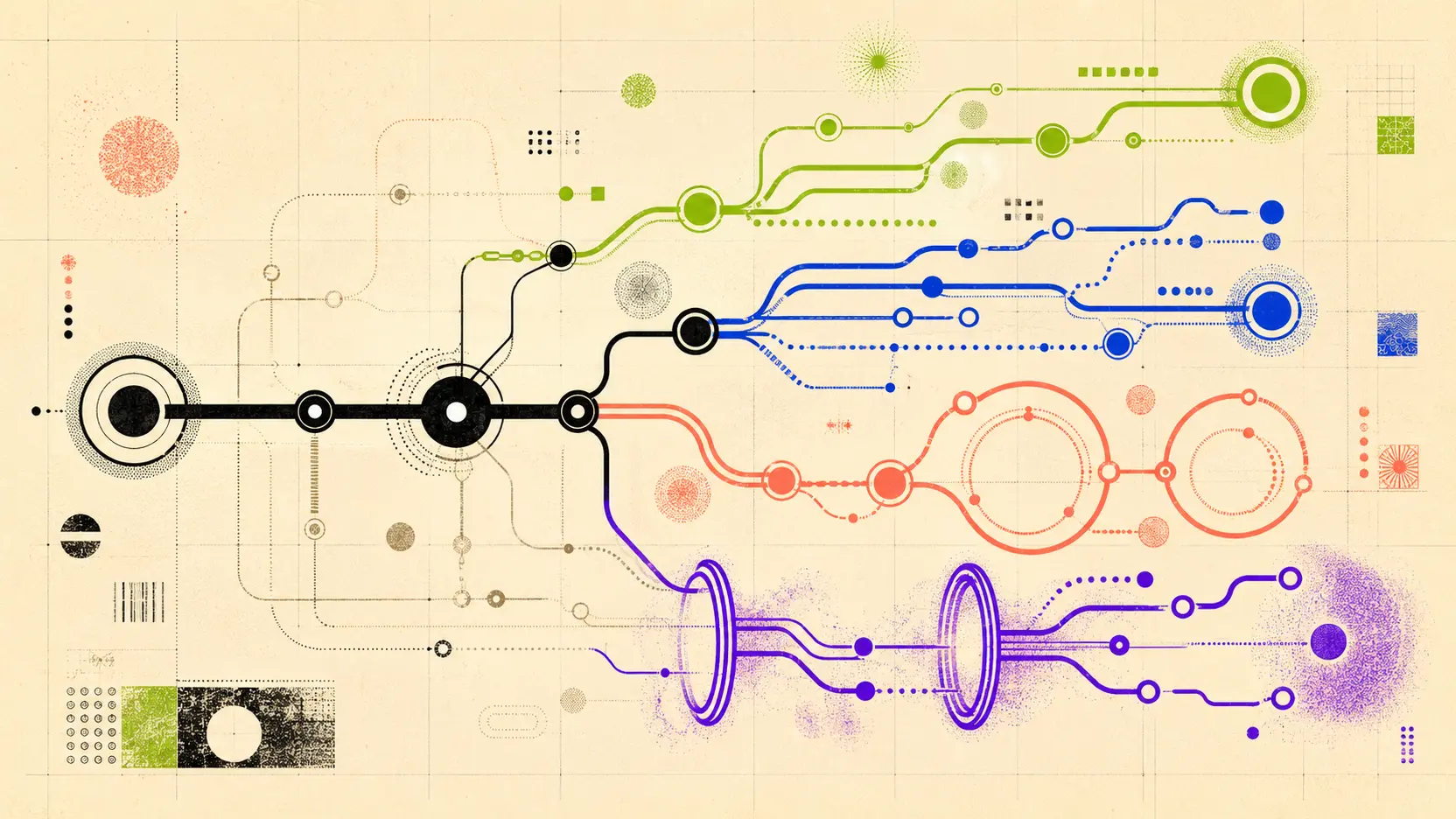
Researched editions and adaptations stay together under one story.
See how stories are organisedSources
Official franchise, creator and publisher sources anchor the chronology. Conflicts and uncertain placements are labelled.
Missing something?
Request a title or correction.
Send a request