Middle-earth Start Here
Where Should You Start Reading Tolkien?
Choose between The Hobbit and The Lord of the Rings, then understand when The Silmarillion and deeper legendarium works become useful.
Read · Listen
Enter the Middle-earth universe
Walk from creation to the Fourth Age.
Explore Middle-earth from the earliest ages through The Hobbit and The Lord of the Rings across Tolkien’s books, major screen adaptations and licensed game continuities.
The oldest legends, the rise and fall of Númenor, the War of the Ring and later imagined journeys all belong on one navigable map of Middle-earth.
Universe orientation
For the books, start with The Hobbit or go directly to The Lord of the Rings if you prefer its larger story. Save The Silmarillion for when you want the older history. For the films, choose the screen continuity and follow a coherent trilogy rather than alternating scenes with books or games.
Why we recommend this route ↓Switch to release order or use Starter Mode for a shorter route.Universe explored
Every mapped story, with adaptations and editions grouped together.
The list follows in-universe chronology. Era and continuity remain visible on each record.
Showing 38 of 38 released stories.
Placed Creation. Source status: Primary published legendarium.
Placed Before Years of the Trees. Source status: Primary published legendarium.
Placed Years of the Trees / exile of Noldor. Source status: Primary published legendarium.
Placed First Age. Source status: Primary published synthesis.
Multiple versions trace the mortal Beren and immortal Lúthien’s quest for a Silmaril.
GoodreadsA complete First Age tragedy follows Túrin and Niënor under Morgoth’s curse.
GoodreadsTolkien’s evolving accounts of the hidden city’s destruction gather one of the legendarium’s central First Age stories.
GoodreadsPlaced First Age. Source status: C/A textual layer.
Placed First Age and framing. Source status: Textual history, not one canon.
Placed Second Age / Númenor. Source status: Primary published synthesis.
Placed Second Age. Source status: C/A textual layer.
A chronological compilation assembles Tolkien’s major Second Age writings about Númenor and the Rings of Power.
Placed Second Age. Source status: Primary synthesis.
Placed Second Age. Source status: Variant textual history.
Placed Third Age. Source status: C/A textual layer.
Placed Third Age overview. Source status: Primary synthesis.
Bilbo joins Thorin’s company on the road to Erebor. The source novel and its screen, audio and game adaptations share one story card but keep their separate continuities.
GoodreadsPlaced 3018–3019 TA. Source status: Primary narrative.
GoodreadsPlaced 3019 TA. Source status: Primary narrative.
GoodreadsPlaced 3019–3021 TA. Source status: Primary narrative.
GoodreadsPlaced First–Fourth Age history. Source status: Multi-Era primary source.
Posthumously edited narratives and background expand characters and events across all three ages.
GoodreadsPlaced multiple eras + composition history. Source status: Reference / variants.
Placed multiple ages. Source status: Reference / variants.
GoodreadsPlaced ~183 years before Jackson LOTR. Source status: X.
IMDbPlaced 2941 TA adaptation. Source status: X/R.
IMDbPlaced 2941 TA adaptation. Source status: X/R.
IMDbPlaced 2941–2942 TA adaptation. Source status: X/R.
IMDbPlaced War of Ring adaptation. Source status: X/R.
Placed War of Ring adaptation. Source status: X/R.
Placed War of Ring adaptation. Source status: X/R.
IMDbPlaced compressed Second Age. Source status: X.
IMDbPlaced after S1. Source status: X.
IMDbBilbo joins Thorin’s company on the road to Erebor. The source novel and its screen, audio and game adaptations share one story card but keep their separate continuities.
Placed partial LOTR adaptation. Source status: X/R.
The War of the Ring reaches its conclusion; Tolkien’s appendices preserve histories beyond the adapted ending.
Talion and Celebrimbor begin a separate licensed story set between The Hobbit and The Lord of the Rings.
The Monolith game continuity continues its war against Sauron and departs further from Tolkien’s text.
Not part of the checklist
These records are tracked for context but are excluded from chronology numbers, filters and progress until release.
From the Library
Make sense of the timeline, then find your next story.
Middle-earth Start Here
Choose between The Hobbit and The Lord of the Rings, then understand when The Silmarillion and deeper legendarium works become useful.
Read · Listen
Middle-earth Story Explained
Understand The Silmarillion’s mythic history, its five-part structure and what it adds to Tolkien’s world before choosing when to read it.
Read · Listen
Editorial guidance
The Silmarillion describes earlier history, but an earlier era need not come first on your bookshelf. The Hobbit offers a contained introduction; The Lord of the Rings gives you the larger journey. Choose the reading experience you want now, then return to the historical map when names and older events become questions you want answered.
Some books return to stories covered in other collections. The Children of Húrin expands an older tale rather than happening after The Silmarillion as a numbered sequel. A chronology can show that relationship, but cannot turn manuscript versions and overlapping collections into a perfectly linear first-read sequence.
The book legendarium, screen adaptations and licensed games have different narrative choices. Use the continuity labels when moving between them; a game set in a familiar age is not a missing Tolkien chapter. Companion and textual-history books are valuable for deeper study, but you do not have to read them before enjoying the central novels.
Distinguished reading entry points, overlapping source texts and separate adaptation routes. This date covers these reading and viewing notes, not a fresh audit of every chronology record. The guide’s coverage date remains above.
Starting points and optional-route judgments are Story Order recommendations. They are distinct from official chronology and canon statements.
Quick answers
Direct answers based on the same chronology, continuity labels and coverage notes used in the guide.
For the books, start with The Hobbit or go directly to The Lord of the Rings if you prefer its larger story. Save The Silmarillion for when you want the older history. For the films, choose the screen continuity and follow a coherent trilogy rather than alternating scenes with books or games.
Use chronological order to follow events as they happen. Use release order when you want to preserve the sequence of the original reveals. Both views use the same researched stories.
All-media guide: 40 ordered story records across Tolkien’s legendarium, major screen adaptations and licensed game continuities. Editions and retellings attach to their parent work instead of becoming duplicate chronology events. Coverage is current through released and confirmed story material available by 22 September 2026.
Suggested routes
Use the full chronology or follow a shorter route.
Move to The Silmarillion only after the central narrative.
Release order creates the stronger introduction to Jackson’s continuity.
It is not a prequel in the Jackson film continuity.
Story versions
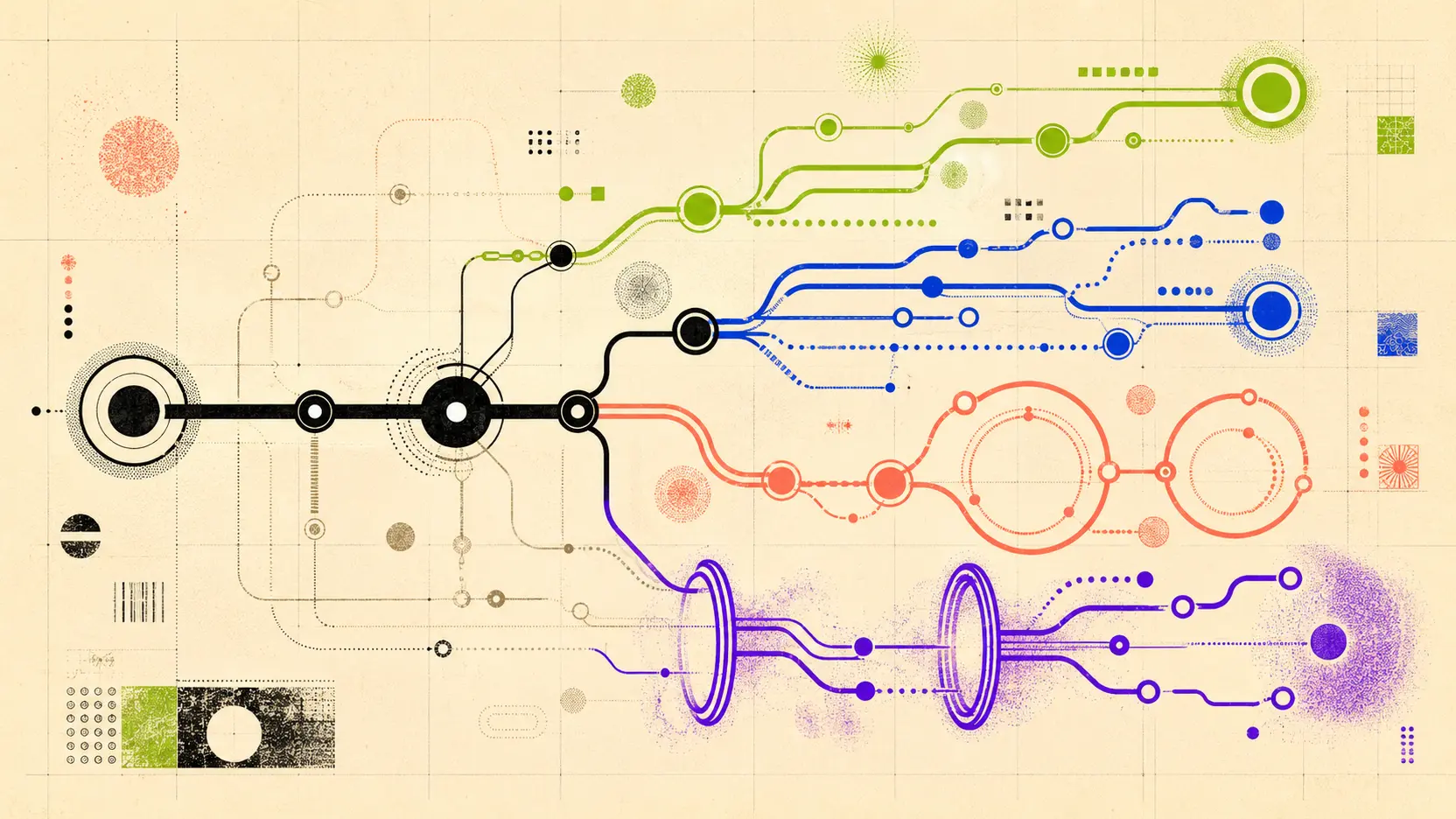
Researched editions and adaptations stay together under one story.
See how stories are organisedSources
Official franchise, creator and publisher sources anchor the chronology. Conflicts and uncertain placements are labelled.
Missing something?
Request a title or correction.
Send a request